
BENEFITS
Sustainability is part of our process.
Galvanizing protects materials from harsh conditions and extends the product’s service life. At the end of its life cycle, the product can be fully recycled by remelting, without releasing a single gram of rust.
The main advantages of hot-dip galvanizing:
Lower initial cost
Hot-dip galvanizing is generally very cost-competitive compared with other forms of steel protection. The cost of labour-intensive coatings such as painting has risen faster than the cost of factory-applied hot-dip galvanizing.
Less maintenance, lower lifetime cost
Even where the initial cost is higher than that of alternative coatings, galvanizing has lower maintenance costs over the service life of the component or structure. Maintenance is even more expensive when structures are in remote locations.
Long life
Galvanized coatings on structural components last more than 40 years in most rural environments and between 10 and 30 years in most aggressive, urban and coastal environments.
Surface preparation
Acid immersion as a pre-treatment ensures uniform cleaning of the steel surfaces. Traditional organic coatings, by contrast, must be applied to abrasive-blasted surfaces (usually to grade Sa 2½ or higher under ISO 8501-1) that have been inspected, and their application depends on ambient conditions and relative humidity. All of this adds to the cost of a robust paint system.
Adhesion
The hot-dip galvanized coating is metallurgically bonded to the steel substrate.
No environmental contamination
The coating is non-toxic and contains no volatile substances.
Speed of application
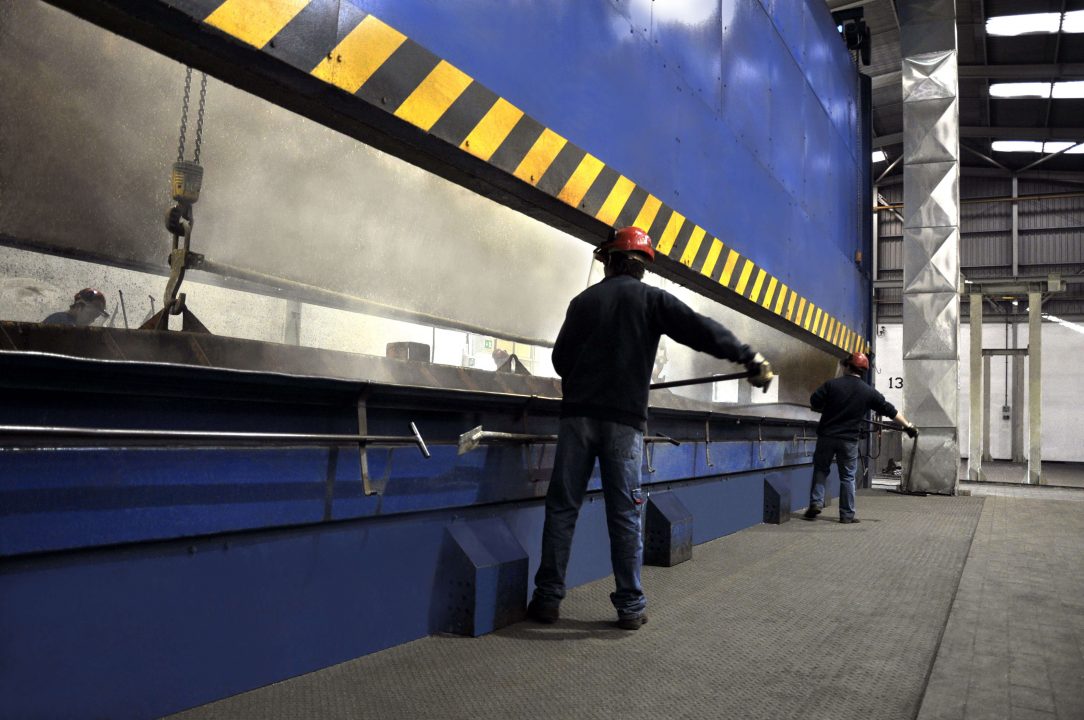
A protective coating is applied in minutes, whereas a traditional paint system can take several days. Galvanizing does not depend on weather conditions.
Uniform protection
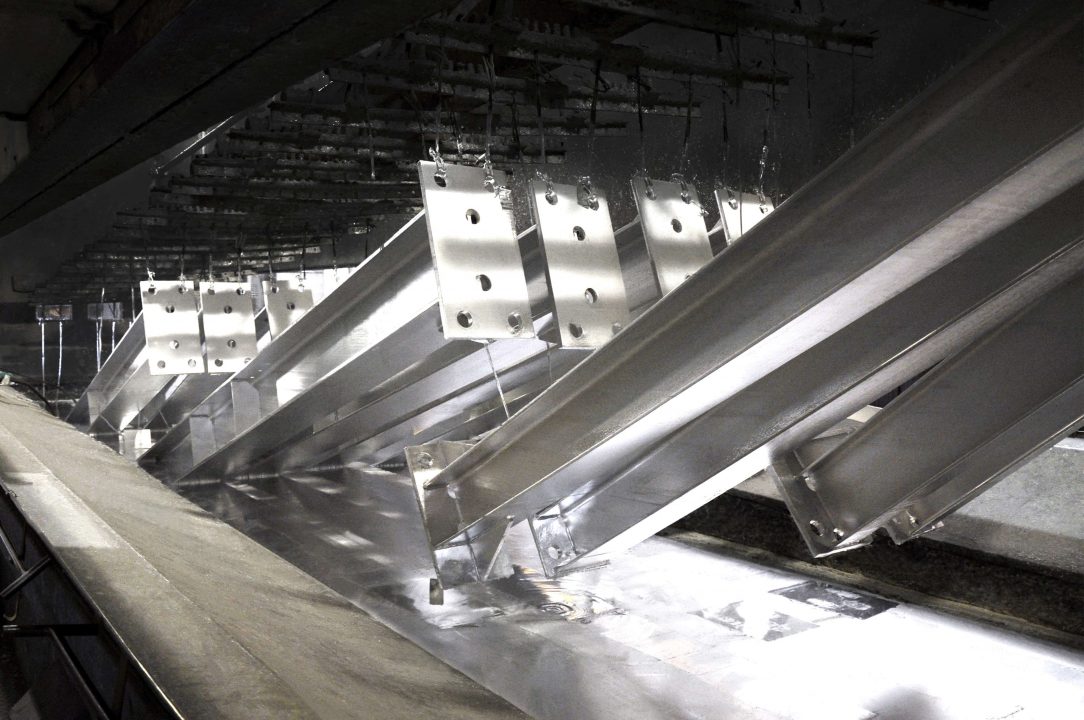
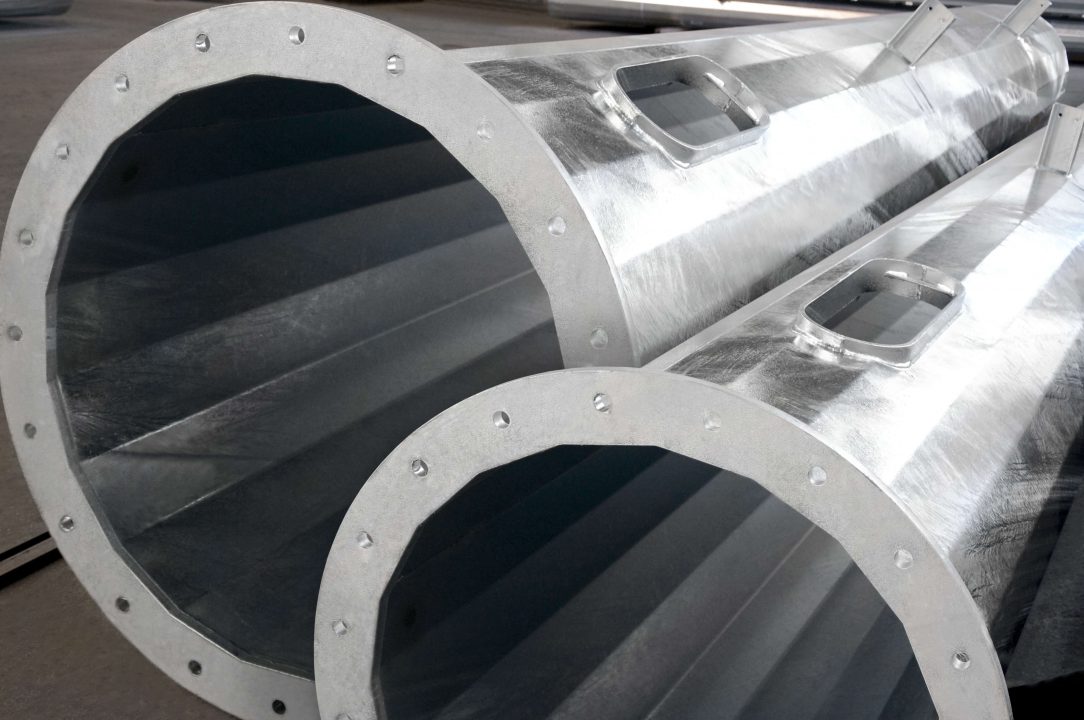
Every surface of a hot-dip galvanized component is protected, inside and out, including recesses, sharp edges and areas that other coating methods cannot reach.